"We're not critics. We're professional fan-girls." --- This blog is dedicated to movies and the entertainment industry. We use random selection to bring into light the best and worst of streaming films and entertainment news.
Streaming Service: Peacock Movie Name/Year: Bray Wyatt: Becoming
Immortal (2024) Genre: Documentary Length: 2h 3min Rating: TV-14 Director: Steve Conoscenti Writer: Matt Braine, Steve Conoscenti, Ben Houser Blurb from IMDb: The story behind one of the
most revered and mysterious characters in WWE history and the man himself,
Windham Rotunda, has never been documented, until now. Selina’s Point of View: Trust the dice doesn’t
often cover documentaries. Both Cat and I have ADHD and most documentaries will
put us to sleep. Even quicker if it’s on a random subject that neither of us
have any interest in or emotional connection to. We’ve been able to do some,
mostly on subjects we’re very close to. So, that begs the
question: why this one? When I was young,
I followed the WWE religiously. As a child, my uncle used to take me to the
shows – even to a convention once. As a teen, I had weekly gatherings with my
friends and pizza in order to watch RAW. I fell off of it for reasons I don’t
think I’ll go into here. For a long time, it was just something that stayed on
my periphery. It was interesting, but not something I could bring myself to
watch again. I still listened to our friends at he Basement Bookers Podcast, of
course. One of them was a regular at my pizza RAWs, after all, but that was
where my interaction with professional wrestling ceased. The dulcet tones of banter
between Basement Jer and Rich the Riz. Until recently. After a Royal
Rumble party, I started to get interested again. The last time I watched,
female wrestling was relegated to bra & panty, wet & wild, and the
occasional evening gown matches. It felt less like wrestling and more like a
page from a porn magazine. What I saw at the Royal Rumble this year was
anything but that. It reignited my interest. Naturally, I’ve
been looking to the Basement Bookers to get my feet wet on the new WWE. I learned all
about the new storylines and factions. Triple H’s new role in the company. Who
the heels and faces are and why I should care. Most of it I was able to pick up
from watching the shows and the occasional one liner from Rich or Jer. The subject of
Bray Wyatt proved to be a bit more complex. During a visit
with Rich the Riz, he suggested watching Bray Wyatt: Becoming Immortal.
I was skeptical. Although interested in the subject, it was still a documentary.
I decided I’d give it a chance. The documentary is
solid. There’s none of that monotone, Ben Stein style narration that makes my
eyelids heavy. Each guest has a unique perspective of Bray Wyatt and is
undeniably a large part of his story. Either they were family, a boss, a
friend, a mentor, or someone he mentored. There were no fluff interviews
conducted with people that had barely a tertiary connection with him – as can
sometimes occur. What sold me on
it, however, was not the content. It was the reactions I saw in my viewing
buddy. I’m an outsider.
I wasn’t around for any of Bray Wyatt’s time in the WWE. I didn’t get to see
his fireflies as the phenomena occurred, I didn’t follow the Fiend. If I had
been watching at the time, I would have adored him, but that doesn’t make me
the target demographic for Bray Wyatt: Becoming Immortal. People like
Rich the Riz are the target demographic. And the effect
this documentary had on him was beyond anything I expected. In fact, I asked
him to write a few words and, instead, he took over Cat’s portion of today’s
review. (Don’t worry, she’s happy for a break.) Basement Bookers’ very own Rich the Riz’s Point of View: Bray
Wyatt: Becoming Immortal
was a documentary that I was greatly looking forward to watching but was
equally anxious about. Anyone that saw his work in WWE, whether you loved it or
hated it, knew that the man behind the character was of a different breed. His
was one of the most truly unique minds ever to perform in pro wrestling, having
created four distinctly unique characters - five if you include the Uncle Howdy
character that he created for his brother to use alongside him. Bray Wyatt’s
relatively short but legendary career was highlighted by interactions and
matches with other well-respected greats in the industry, including Randy
Orton, John Cena, and the Undertaker. This documentary covers his pre-WWE life
growing up as the son of a former WWE performer, his college football
aspirations, his WWE career, his untimely passing, and the legacy he left
behind. We even get a glimpse into what the future would’ve held for the late,
great superstar. Like many
WWE-produced video projects, I found Bray Wyatt: Becoming Immortal to be
quite thorough, particularly with respect to how in-depth it dives into the
personal life of Windham Rotunda (the man who portrayed Bray Wyatt). I also
felt it was very tastefully done, featuring interviews with his family and
peers, and narrated by an icon in the wrestling industry, the Undertaker. Whether he was
loved, feared, or misunderstood, the Bray Wyatt character will always live on
in the hearts and minds of WWE fans worldwide, and this documentary is a
fitting tribute to his legacy. Follow the
buzzards… Rotten Tomatoes Critic Score – None Rotten Tomatoes Audience Score – 100% Metascore – None Metacritic User Score – None IMDB Score – 8.7/10 Trust the Dice: Selina’s Rating – 5/5 Trust the Dice: Rich’s Rating – 5/5 Movie Trailer:
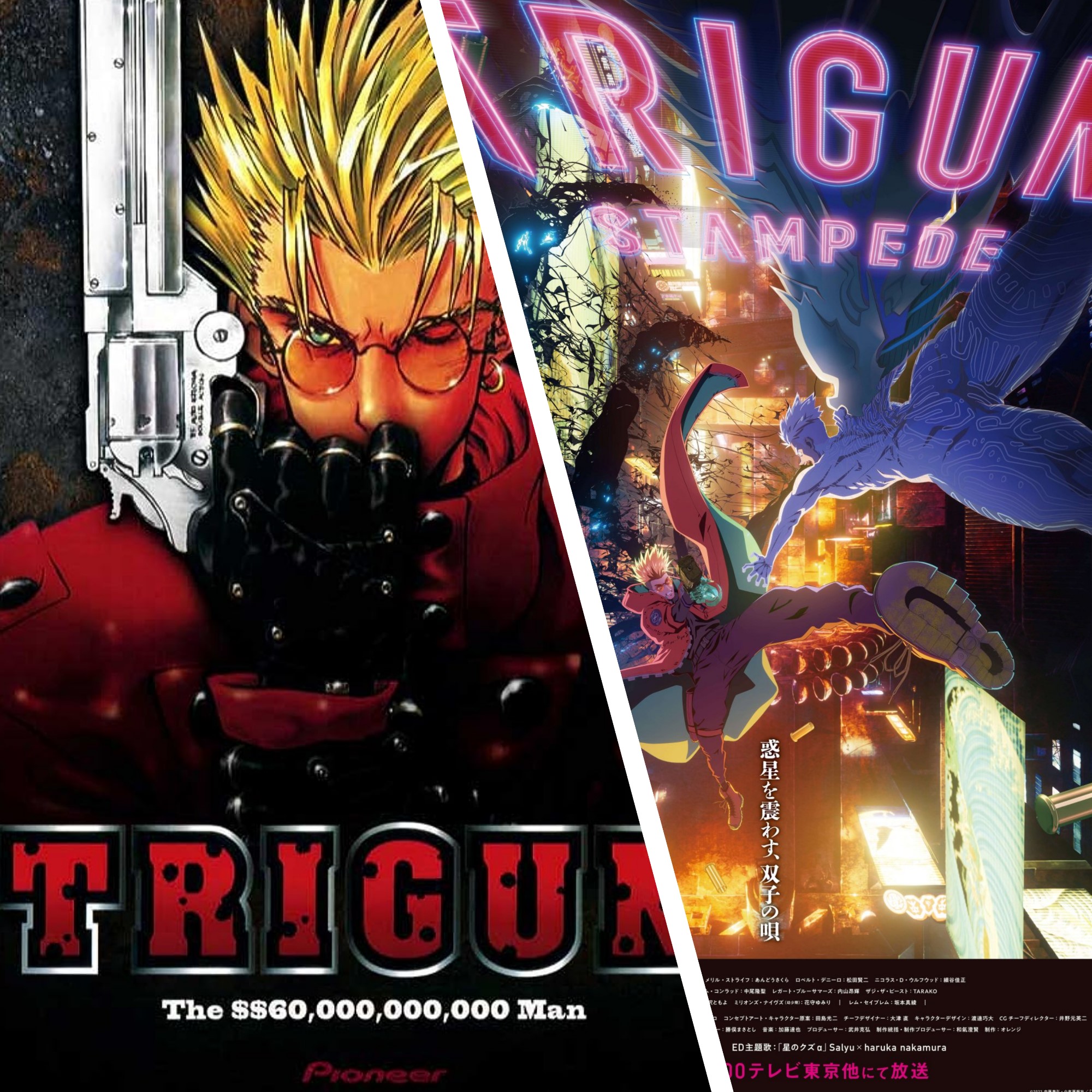
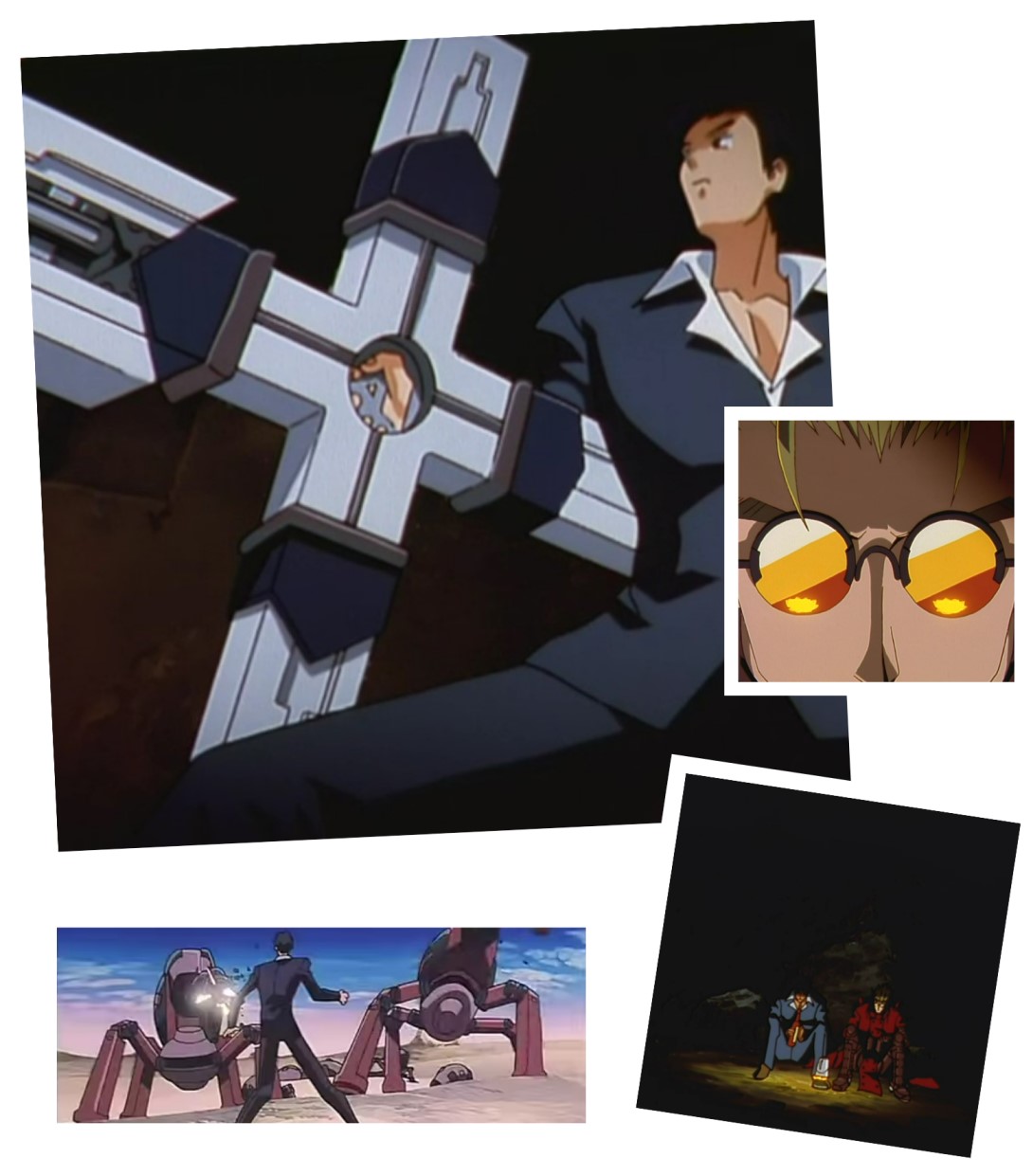
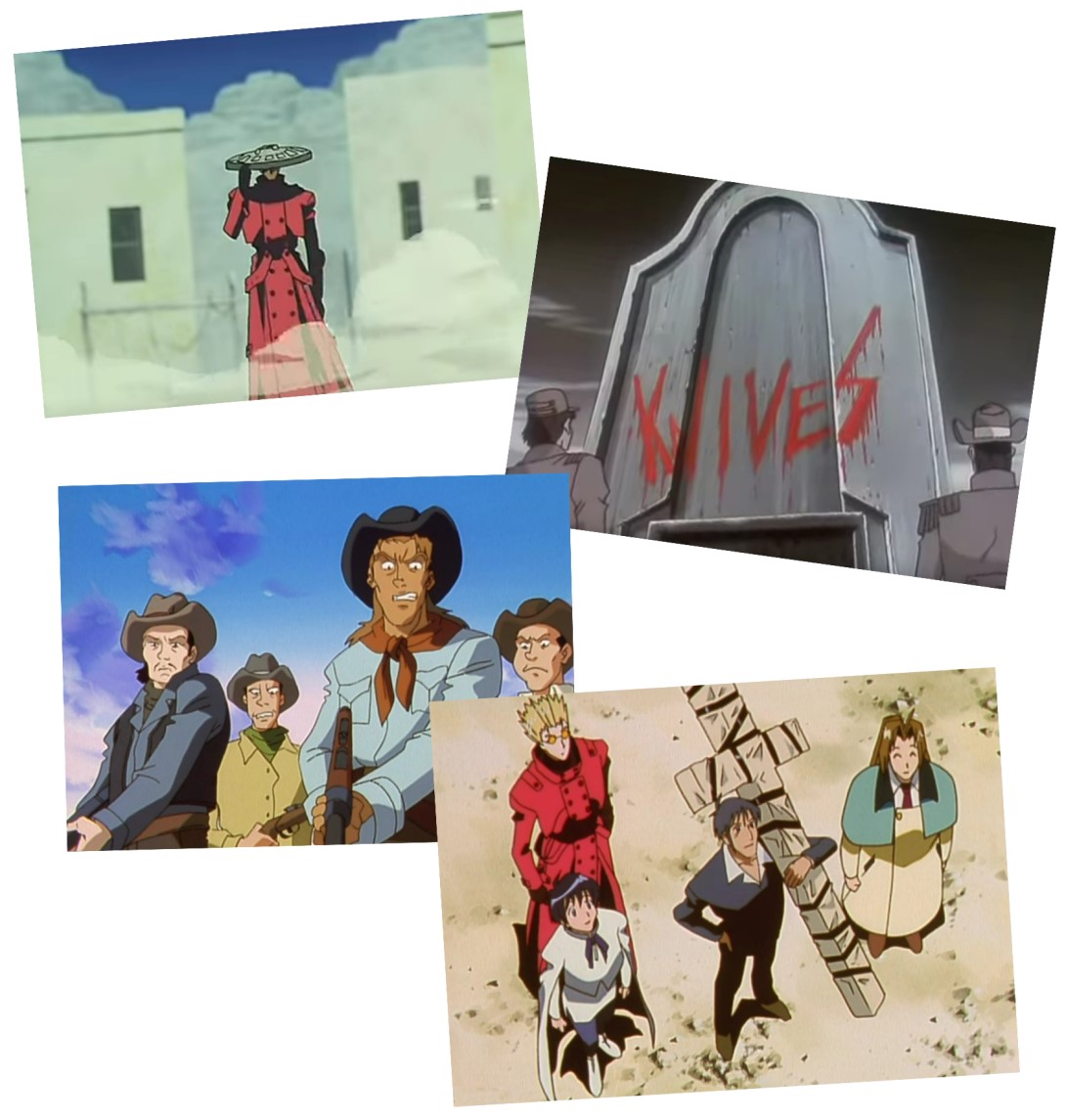
Series Name/Year: Trigun(1998) Series Name/Year: Trigun Stampede(2023-) Streaming Service (Both): Crunchyroll Genres (Both): Animation, Action,
Adventure, Comedy, Drama, Sci-Fi, Western Average Episode Length -
Trigun: 24 min (1 Season, 26 episodes) Average Episode Length -
Trigun Stampede: 24min (1 Season, 12 episodes) Rating (Both): TV-14 Director - Trigun: Satoshi Nishimura Directors - Trigun
Stampede: Kenji Muto, Minoru Yamaoka, Naomichi Yamato, Hiroshi
Nishikiori, Mie Ôishi Writers - Trigun: Yôsuke Kuroda, Yasuhiro
Nightow Writers - Trigun Stampede: Tatsuro Inamoto, Yasuhiro
Nightow, Shin Okashima, Takehiko Okishi, Yoshihisa Ueda Actors - Trigun: -Japanese Cast: Masaya Onosaka, Satsuki
Yukino, Hiromi Tsuru, Show Hayami, Tôru Furusawa, Masamichi Ota, Aya Hisakawa,
Toshihiko Seki, Kôki Miyata - English Cast: Johnny Yong Bosch, Lia Sargent,
Dorothy Elias-Fahn, Jeff Nimoy, Kirk Baily, Bridget Hoffman, Richard Cansino,
Bryce Papenbrook, Joshua Seth Actors - Trigun Stampede: - Japanese Cast: Yoshitsugu Matsuoka, Sakura Ando,
Kenji Matsuda, Yoshimasa Hosoya, Junya Ikeda, Yumiri Hanamori, Tomoyo Kurosawa,
Tarako, Ryûsei Nakao, Maaya Sakamoto, Kimiko Saitô, Mirei Kumagai - English Cast: Johnny Yong Bosch, Sarah Roach, Ben
Bryant, David Matranga, Austin Tindle, Kristen McGuire, Madeleine Morris, Megan
Shipman, Larry Brantley, Emily Fajardo, Lydia Mackay IMDb Blurb - Trigun: Vash the Stampede is the
most infamous outlaw on the planet Gunsmoke and with a 60 billion double dollar
price on his head the most sought after! IMDb Blurb - Trigun
Stampede: Follow gunman Vash the Stampede as he struggles to
maintain his pacifist ways while avoiding the immense bounty on his head.
Cat’s Point of View: Before we
delve into the warm fuzzies of the Holiday Season – better yet, before we
return to our more usual review fare with the end of the SAG-AFTRA strike; I
thought I’d dive into one of my favorite Japanese manga adaptations: Trigun.
Of course,
there’s more than 1 series to mention, considering the freshly released Trigun
Stampede that premiered this year. Both series approach the same material
(for the most part) from different perspectives, and I find both of them
excellent in their own ways.
I have a
bit of a soft spot for westerns. Couple that with my love of science fiction
and adventure and Trigun just started checking a lot of boxes in the
positive column as I caught the original series airing on Adult Swim years ago.
If I had
to pick some well known titles to mash together to compare Trigun to,
I’d have to say that it would be somewhat like a combination of the world of Mad
Max (1979) and the sci-fi blend in Cowboy Bebop (1998-1999). (Of
course, Trigun was one of Bebop’s contemporaries airing in the
same year.) I adore the blend of action with drama and comedy. Some of the
physical anime gags go a little over-the-top (especially facial features and
expressions). Those really aren’t my favorite bits, but everything else about
the series is a wonderful blend of chaos, futuristic steampunk, and the visuals
of an alternate world “old West.”
Before I
go any further, I feel I do need to warn that this review will inherently
contain some mild SPOILERS regarding the Trigun storyline continuity.
The 1998 series and the 2023 series approach Vash’s story from different points
in the timeline and some bits of information revealed as a surprise or
plot-twist late in the Trigun original series are front and center in
the very first episodes of the Trigun Stampede series. Further, anyone
who has watched the original series will generally know most of what will
happen in Trigun Stampede, however not everything is shown in this first
season. There’s room for the “missing characters” (to some extent) and other
plot elements to be explored in season 2 and potentially beyond.
First,
let’s talk animation style. With the 20-plus years between Trigun and TrigunStampede, it’s a given that animation production methods and styles will
have changed over time. 1998’s series fits right in with the high quality of
its contemporaries. The action was handled really well, and not all of the
comedy digressed into “comicalization” or simplistically exaggerated facial
expressions for the characters. Hey, I’m not knocking that stylistic choice –
it’s just not my preferred cup of tea. Even so, plenty of my favorite series
utilize that affectation as a common anime trope. It doesn’t generally impact
my enjoyment.
The Trigun
Stampede series is rather straight-shooting in a seamless animation style
that remains uniform, even while still delivering the moments of emotion and
comedy. The new style is clearly rendered in a digital format, though still
retains much of the “old school” animation charm rather than the shiny plastic
nature of most 3D animation. The action is fluid and well done, and Stampede
also utilizes a more modern approach to cinematography. As an example, there’s
one scene in an early episode of Stampede that comes to mind where Vash
is using parkour as he dodges bullets, and as he flips onto another rooftop or
similar surface the camera does a rotation with him. (This scene is actually
shown in the music video that accompanies the opening theme music for Stampede.)
Now let’s
get into the story a bit. Trigun Stampede might be hard for some fans of
the original series to take in at first because of some changes and/or seeming
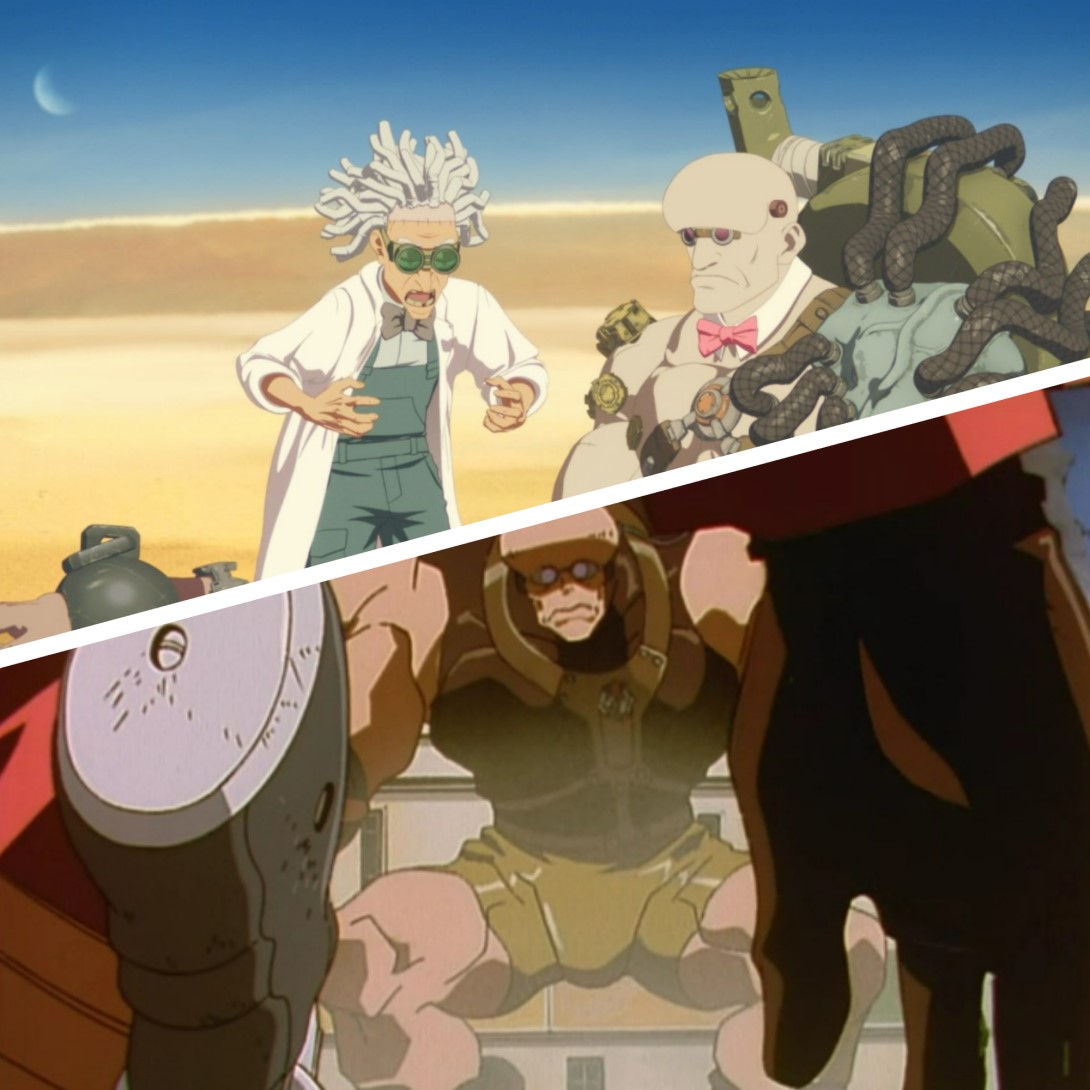
omissions. Some characters aren’t seen that are in the 1998 series and even the
world has a different name. Previously called Gunsmoke, it’s now called Nomans
Land. Some of the villain-of-the-week characters don’t make an appearance, and
even some of the Gung-Ho Guns don’t show. Some characters have different backgrounds…
you get the picture.
Most of
the differences are honestly splitting hairs, in my opinion. Stampede is
not worse for wear for these changes. Honestly, it felt like the story was more
cohesive and streamlined. It felt like the original series had more
light-hearted moments sprinkled through the explosions, raining bullets,
questionable pick-up lines, and camaraderie. Trigun Stampede has the
comedy and action down, but also leans in a bit more to drama, ethics,
discrimination, personal moral code, and existential questions. It’s a bit
heavier in tone in some places, considering you know from the outset what the
relationship is between Vash and Knives and get an inkling as to what the
stakes are overall.
There’s
one main thing to keep in mind, however. When the 1998 series ran, the manga
was not finished by a long shot. Both series are made from a combination of Trigun
and Trigun Maximum. The latter just wasn’t complete when the first
series made its run. Maximum also wasn’t a reboot of the original Trigun
manga, but a continuation. The name only changed due to legal red tape because
the publisher changed, etc. Stampede now has the full manga run at its
disposal to draw from, and has the opportunity to spin the entire story in a
different way than presented in 1998.
Both
versions of the series remain true to Vash’s core journey – both literal and
figurative. He strives to put together what went wrong in the past and find
some redemption in his life. Vash has profound sadness within him, and yet shows a great understanding and zest for life and laughter all the same. Throughout both series, in the face of daunting circumstances, he maintains his beliefs in finding alternate
solutions to violence. Though, when violence cannot be avoided, he shows
strength and stands up to defend even those that have tried to hurt him. In
this way, the story of Trigun in both series reminds me of the way of life and perspective
of the late Gandhi and makes this story that much more powerful.
“My creed of nonviolence is an extremely active force. It has no
room for cowardice or even weakness. There is hope for a violent man to be some
day non-violent, but there is none for a coward. I have, therefore, said more
than once....that, if we do not know how to defend ourselves, our women and our
places of worship by the force of suffering, i.e., nonviolence, we must, if we
are men, be at least able to defend all these by fighting.” - M.K. Gandhi
As usual,
I feel I must disclose that, at this time, I haven’t read the manga to know
specifically what differences exist between either Trigun’s original
series or Stampede and the source material. There are many anime
resource sites, forums, and databases you are welcome to peruse should you wish
to look up the play-by-play yourself.
One of the
things that brings me great joy about all of the Trigun series is that, at
least for the English dubbed versions, Johnny Yong Bosch (Black Clover,
Demon Slayer: Kimetsu no Yaiba, Bleach: Thousand Year Blood War) has
remained the voice of Vash the Stampede throughout. He seems to be the
only consistent cast member to return through both series and the 2010
stand-alone movie. He brings something great to all of the characters he brings
to life on the screen, and seemingly effortlessly evokes both their strengths
and vulnerabilities.
Yes, I did
mention that there was a Trigun movie. Trigun: Badlands Rumble
hit screens in 2010 as an independent story that could have taken place
somewhere in the middle of the continuity of the 1998 series. It didn’t pick up
from the end, as some might have hoped. In that way it shared even more in
common with the Bebop series, as Cowboy Bebop: The Movie (2001)
did the same thing (much to my dismay).
Trigun
Stampede does have
a 2nd season announced, though details are scarce as to the timeline
for production. The ending of Stampede’s first season did allude to the
return of a familiar original series character that was conspicuously missing
thus far. There’s always room for more villains and other supporting characters
to pop up in the next installments, as well as new elements of the expanded
story within the source material. I just hope they also find a way to fit
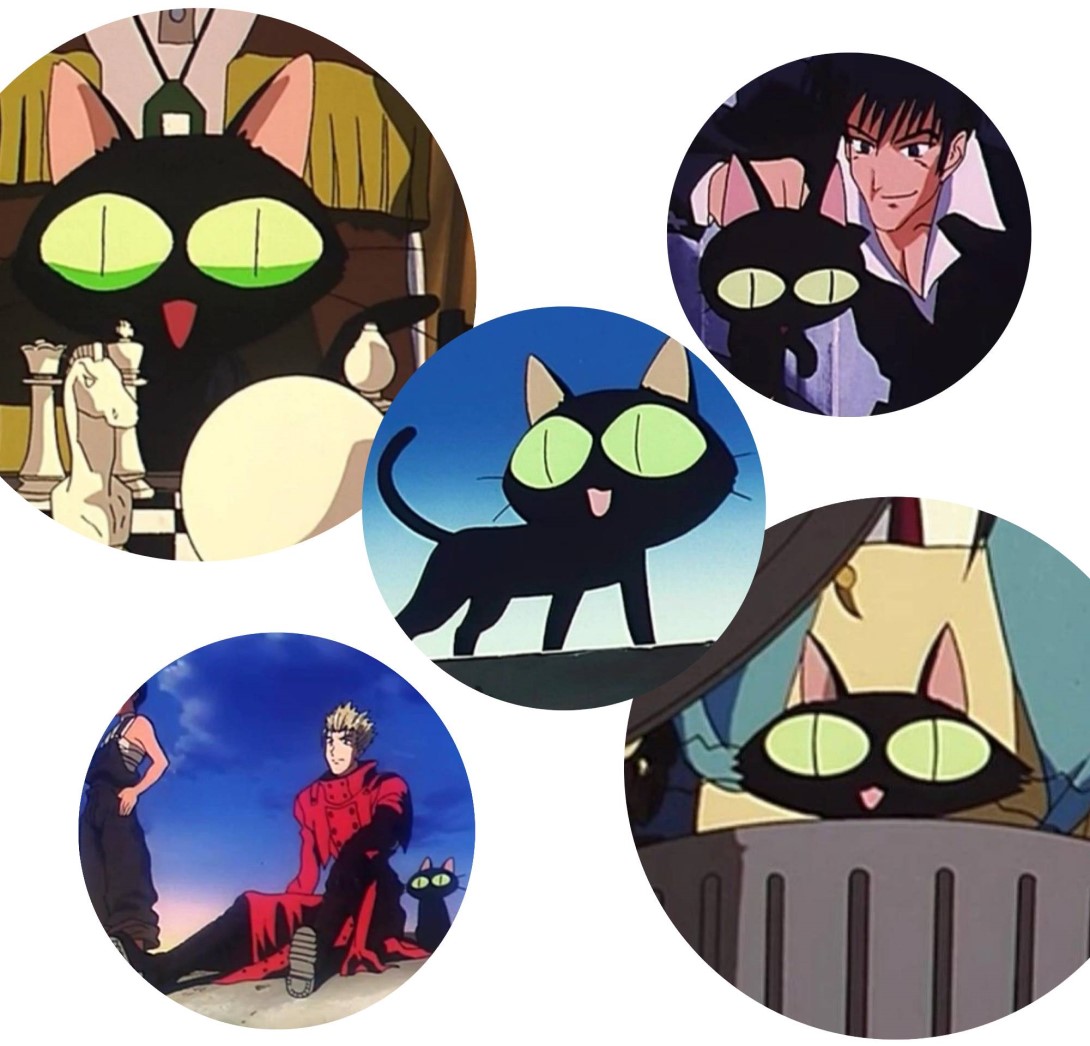
Kuroneko back in for at least a cameo. The familiar silly black cat was a
missed opportunity in Stampede, in my book at least.
If you are
a fan of the original series, I implore you to give Trigun Stampede a
chance. If you haven’t watched any of the series yet – old or new – I do not
envy your decision between original and new series, but once you’ve watched one,
I encourage you to watch the other. Stampede is definitely an easier
binge with only 12 episodes compared to the original’s 26 + movie, but I’d have
to say it’s well worth the time spent to view both perspectives.
Average Episode Length:
24 min
(1 Season, 25 eps.)
Rating: TV-14
Directors: Fuyumi Ono, Akira Mano
Writers: Luci Christian, Jack
LaRouche, Andrew Rye, Sonny Strait, Shiho Inada, Fuyumi Ono
Actors:
Japanese Cast – Yuuki Tai, Kaori Nazuka,
Kenji Hamada, Rie Kugimiya, Nobuhiko Okamoto, Masami Suzuki, Ken Narita,
Kousuke Okano, Miyuki Sawashiro
English Cast - Todd Haberkorn, Cherami Leigh, Travis
Willingham, Jad Saxton, Jason Liebrecht, Colleen Clinkenbeard, J. Michael
Tatum, Eric Vale, Kent Williams, Caitlin Glass
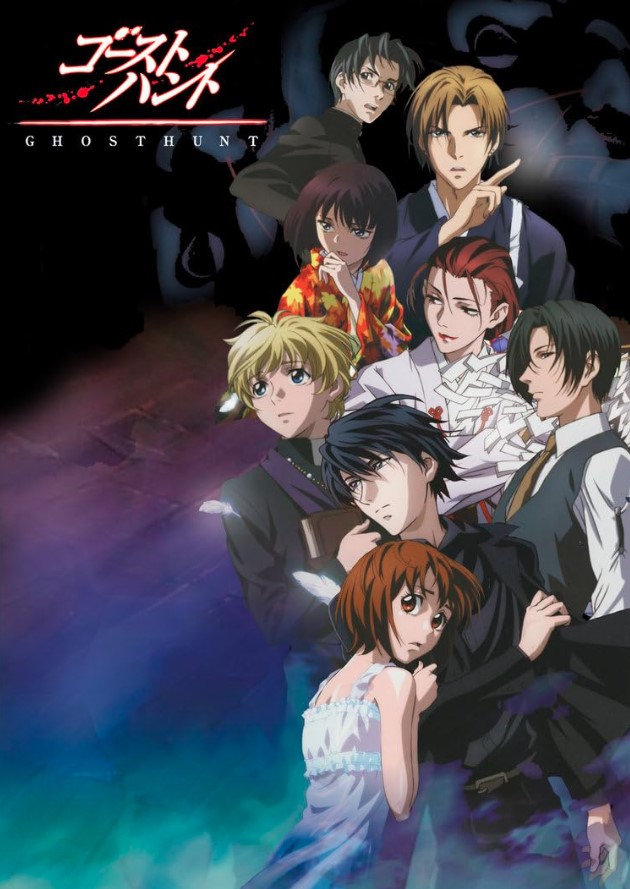
CrunchyRoll Blurb: Mai’s fascination with
the unknown leads her to join the Shibuya Psychic Research team. Using her
growing psychic abilities, Mai will work with a spirit medium, a shrine maiden,
an exorcist, and a monk to uncover the darkest mysteries of the unseen.
Cat’s Point of View:
After the scorching summer we’ve just had, it’s such a
relief to finally be getting some weather that feels generally like fall. It’s
almost mid-October and the anticipation for the thrills and chills of the
season is only building by the day. I decided to shake things up a little in my
quest for some lesser-known spooky anime and took a meandering journey through
some of the titles that Crunchyroll obtained through their merger with Funimation.
One such anime title looked like it would be exactly what I was seeking – Ghost
Hunt.
Considering how long ago Ghost Hunt was released, I
was surprised that I hadn’t heard of it before – and, at the same time, not so
much. I’ve loved anime as a genre ever since I was first introduced to it back
in high school, but I know I haven’t even seen a 10th of the titles
out there. I digress…
One of the factors that encouraged me to watch this series
was my enjoyment of ghost-hunting and paranormal related shows. I’ve seen most
of what A&E, SYFY, Discovery, the Travel Channel, and a few others (I’ve
forgotten the acronyms) have to offer along the supernatural niche of reality
TV. I also find myself playing a lot of spooky ghost hunting games with my
friends via Steam and Discord. All of this only fueled my desire to give this
series a chance and had me crossing my fingers that it was as good as I hoped.
I thoroughly enjoyed Ghost Hunt. By the end of the 25th
episode, I was lamenting that there was only one season.
Lets get a little further into it, shall we?
In the very beginning I admit I had a few doubts, but once
things took off it was undeniable that I was hooked by this story. While the narrative
comes primarily from the perspective of Mai Taniyama, a high school student;
each character had their own time to shine along the way. I appreciated that the
young girl’s infatuation didn’t bog everything down as much as I thought it
might, once there were hints that there might be some romantic tension between
some of the characters. Ghost Hunt deftly skirted that topic without
feeling dismissive of it. I’ve since read that the manga’s creator had an idea
of how characters would end up in that regard but never addressed it because
she wasn’t trying to write a romance.
Ghost Hunt decidedly stays true to its titular
premise from beginning to end. I adored its use of technology – some still in
use today in real-world paranormal research - and the efforts made by the team
to debunk hauntings before declaring something supernatural was actually afoot.
The calculated skepticism as well as open-minded teamwork were refreshing.
At this point, once I’ve mentioned an anime has been adapted
from manga I need to give my usual disclosure. I haven’t read the manga for
this series, so I can’t personally attest to whether or not this adaptation stays
true to the page. I haven’t, however, run into any negative reviews through my
cursory research that would indicate otherwise. You’re welcome to check that
out for yourself. There is more to the manga, apparently, that wasn’t included
in the series – but likely not enough for a 2nd season to be
created. I did search around to see if there were any talks about a second
series and found nothing to support that idea anywhere, in spite of generally
glowing reviews for the anime and fans’ wishes for more. Given that Ghost
Hunt aired over 15 years ago, the chances are decidedly slim.
Back to the story!
The ambiance throughout Ghost Hunt was on point. Each
case gave the group new challenges and didn’t feel like a ‘rinse and repeat’ as
so many procedural-type shows fall prey to. The animation style was right in my
preferred comfort zone for aesthetics and everything flowed smoothly. I
snickered to myself that one of the characters reminded me of Sebastian from Black
Butler (2008-2011). I was surprised to learn that the same voice actor for
the English dubbed version also voiced the character in Ghost Hunt - J.
Michael Tatum (RWBY: Ice Queendom, Vinland Saga, My Hero Academia).
Funny enough, while the similarities in the characters may be purely coincidence,
the Ghost Hunt series actually came first!
On a more somber note, while this series is rated PG-13 or
TV-14, it would be best for parents to strongly consider before allowing young
viewers to watch this series. While there were no explicit scenes of a sexual
nature nor were there many depictions of graphic violence, there were many bloody
visuals and the discussion of characters having “unalived themselves,” as today’s
phrasing goes. There are spooky spirits and characters get hurt. Considering
this series is about a team of ghost hunters, there are many depictions and discussions
of death, as well. This is all on the more tame end of the spectrum, but
touches on the topics all the same.
If you have the opportunity and a couple days to run through
these 25 short episodes, I wouldn’t hesitate to encourage you to do so.