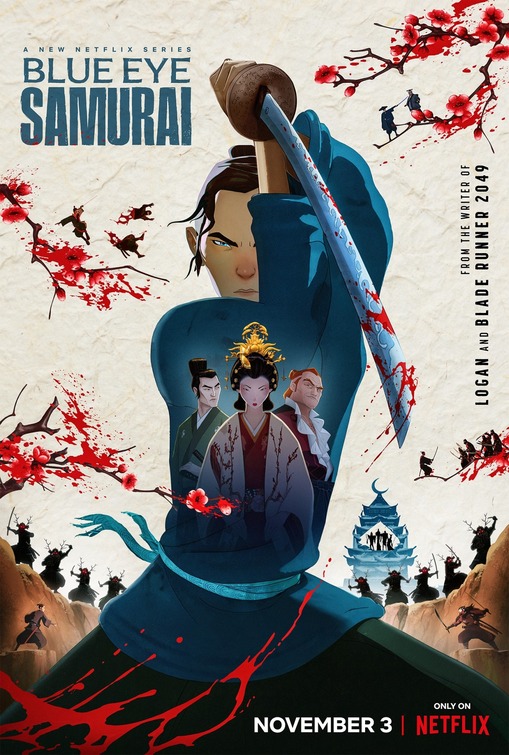
"We're not critics. We're professional fan-girls." --- This blog is dedicated to movies and the entertainment industry. We use random selection to bring into light the best and worst of streaming films and entertainment news.
Average Episode Length:
45 min (1
Season, 8 episodes)
Rating: TV-MA
Production/Distribution: 3 Arts Entertainment,
Blue Spirit Animation, Netflix Animation, Netflix
Creators: Michael Green, Amber
Noizumi
Directors: Earl A. Hibbert, Ryan
O'Loughlin, Jane Wu, Michael Green, Sunny Sun, Alan Taylor, Alan Wan
Writers: Michael Green, Amber
Noizumi, Yana Bille
Actors: Maya Erskine, George
Takei, Masi Oka, Brenda Song, Darren Barnet, Randall Park, Kenneth Branagh,
Cary-Hiroyuki Tagawa, Gedde Watanabe, Patrick Gallagher, Eric Bauza, Clyde
Kusatsu, Ming-Na Wen, Keone Young, Marcus Choi, Ann Harada, Orli Mariko Green,
Judah Green, Harry Shum Jr.,Mark
Dacascos
IMDb Blurb: Driven by a dream of
revenge against those who made her an outcast in Edo-period Japan, a young
warrior cuts a bloody path toward her destiny.
Cat’s Point of View:
I heard a
few good things about Blue Eye Samurai, and the description on Netflix
intrigued me so I couldn’t help but to dive right in. Let me tell you, once I got
started it was hard for me to stop. It was one of the easiest binges I’ve ever
done. I did have to take a break in the middle because adulting requires that
now and again, but I couldn’t wait to jump right back into this revenge saga from
the Edo era of Japan’s history.
I have
always been fascinated by Japan’s history and culture. Of course, anime has
helped fan those flames over the years. This is one such animated film that has
checked all of the proverbial boxes for me; which is why I couldn’t wait to offer
my review for this series.
There are
so many aspects of Blue Eye Samurai that I adore. It makes it hard to
choose a place to begin. Let’s start with visuals – the artistic style and
cinematography.
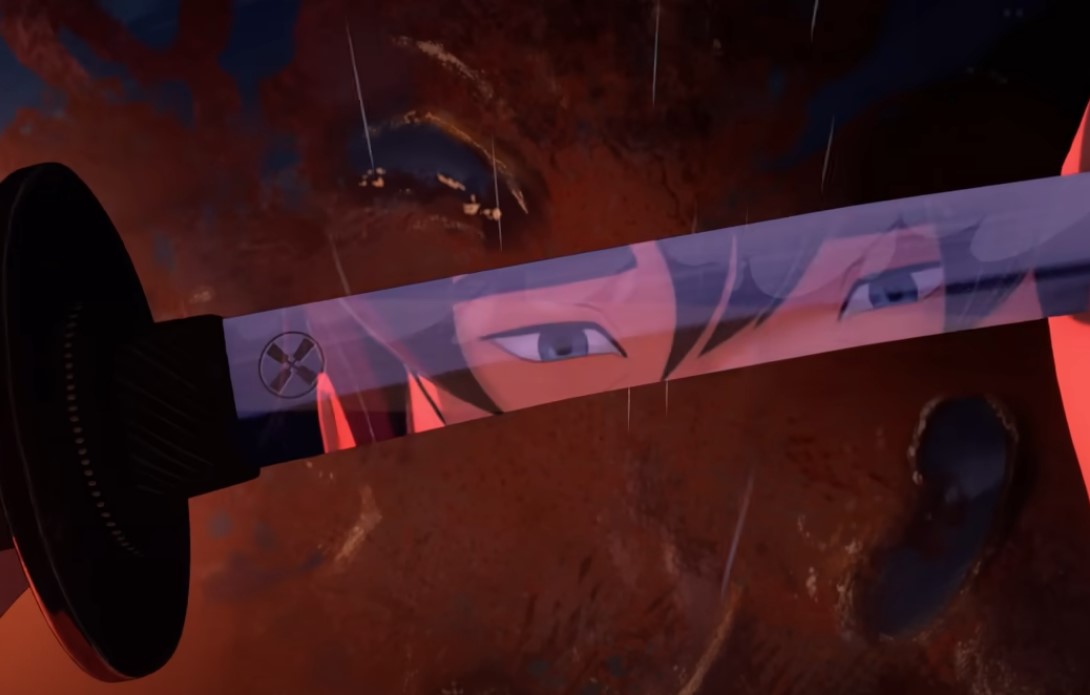
There were points where I forgot I was watching something
animated rather than live-action. Those moments were generally during action
sequences – but I’ll get to that here in a moment. Otherwise, I felt like I was
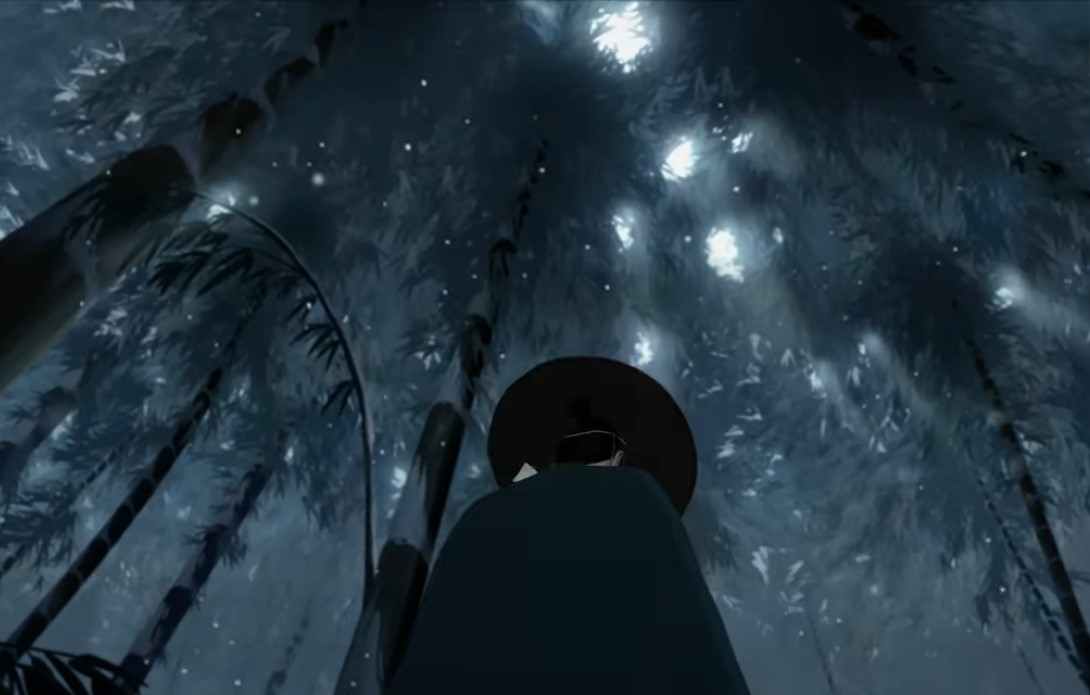
watching an animated painting at times. It was, frankly, breathtaking. I loved
the way the water flowed, how snow fell, leaves blew on the wind, and even how
embers fell from the sky amid dancing flames. There was a skillful play between
2D and 3D animation so that my eye was drawn in, and it didn’t feel flat.
The attention
to detail was immaculate in every way. I could tell a lot of care was put into even
simple things such as character hair, clothing, and movement. This especially
translated into the action sequences. The fight scenes were brilliant. I really
felt like I was watching a live swordmaster on screen fighting.
The use of “bullet
time” and the different camera perspectives really added to the story rather
than feeling like they were just effects thrown in to be flashy. There was
flashing going on – but it was of the steel variety as swords and other period-accurate
Japanese weaponry clashed on screen.
Another
solid point in Blue Eye Samurai’s favor was the character development.
While the main character’s goal was ever present, the story of how Mizu
collected their compatriots and reached this particular life-path unfolds
organically and invested me in the story. Flashbacks were to the point and
built the foundation of the back-story in moments that made sense, rather than
haphazard cut-scenes.
I do feel I
need to mention, as I have before, that the fact that this is animation does
not make this “safe” for kids to watch. The TV-MA rating for Blue Eye
Samurai is absolutely accurate to reflect its content. The series is full
of bloody violence, sporadic (but not gratuitous) nudity, and a few sex scenes.
Nothing stands out as being thrown in for fan-service. Everything has its place
within the story – but it is there.
I’ve
actually watched this series twice now – once on my own, and once with my adult
daughter. We were both very sad that there were only 8 episodes to this season.
We are holding out hope that Netflix orders another season to keep the story
going. In the meantime, it’s possible that Blue Eye Samurai might just
become one of my go-to comfort series to watch when I need something familiar.
Its high critic and audience ratings alike are well warranted. I would
recommend anyone even remotely interested to give it a shot.
Rotten Tomatoes Critic
Score – 100%
Rotten Tomatoes Audience
Score – 96%
Metascore – 88%
Metacritic User Score – 8.3/10
IMDB Score – 8.9/10
Trust the Dice: Cat’s
Rating – 5/5
P.S. - If you're interested in a little bit of "behind the scenes" of how Blue Eye Samurai was made, Netflix made a featurette! Just be warned that it might contain some spoilers to plot, etc.
Series Name/Year: Trigun(1998) Series Name/Year: Trigun Stampede(2023-) Streaming Service (Both): Crunchyroll Genres (Both): Animation, Action,
Adventure, Comedy, Drama, Sci-Fi, Western Average Episode Length -
Trigun: 24 min (1 Season, 26 episodes) Average Episode Length -
Trigun Stampede: 24min (1 Season, 12 episodes) Rating (Both): TV-14 Director - Trigun: Satoshi Nishimura Directors - Trigun
Stampede: Kenji Muto, Minoru Yamaoka, Naomichi Yamato, Hiroshi
Nishikiori, Mie Ôishi Writers - Trigun: Yôsuke Kuroda, Yasuhiro
Nightow Writers - Trigun Stampede: Tatsuro Inamoto, Yasuhiro
Nightow, Shin Okashima, Takehiko Okishi, Yoshihisa Ueda Actors - Trigun: -Japanese Cast: Masaya Onosaka, Satsuki
Yukino, Hiromi Tsuru, Show Hayami, Tôru Furusawa, Masamichi Ota, Aya Hisakawa,
Toshihiko Seki, Kôki Miyata - English Cast: Johnny Yong Bosch, Lia Sargent,
Dorothy Elias-Fahn, Jeff Nimoy, Kirk Baily, Bridget Hoffman, Richard Cansino,
Bryce Papenbrook, Joshua Seth Actors - Trigun Stampede: - Japanese Cast: Yoshitsugu Matsuoka, Sakura Ando,
Kenji Matsuda, Yoshimasa Hosoya, Junya Ikeda, Yumiri Hanamori, Tomoyo Kurosawa,
Tarako, Ryûsei Nakao, Maaya Sakamoto, Kimiko Saitô, Mirei Kumagai - English Cast: Johnny Yong Bosch, Sarah Roach, Ben
Bryant, David Matranga, Austin Tindle, Kristen McGuire, Madeleine Morris, Megan
Shipman, Larry Brantley, Emily Fajardo, Lydia Mackay IMDb Blurb - Trigun: Vash the Stampede is the
most infamous outlaw on the planet Gunsmoke and with a 60 billion double dollar
price on his head the most sought after! IMDb Blurb - Trigun
Stampede: Follow gunman Vash the Stampede as he struggles to
maintain his pacifist ways while avoiding the immense bounty on his head.
Cat’s Point of View: Before we
delve into the warm fuzzies of the Holiday Season – better yet, before we
return to our more usual review fare with the end of the SAG-AFTRA strike; I
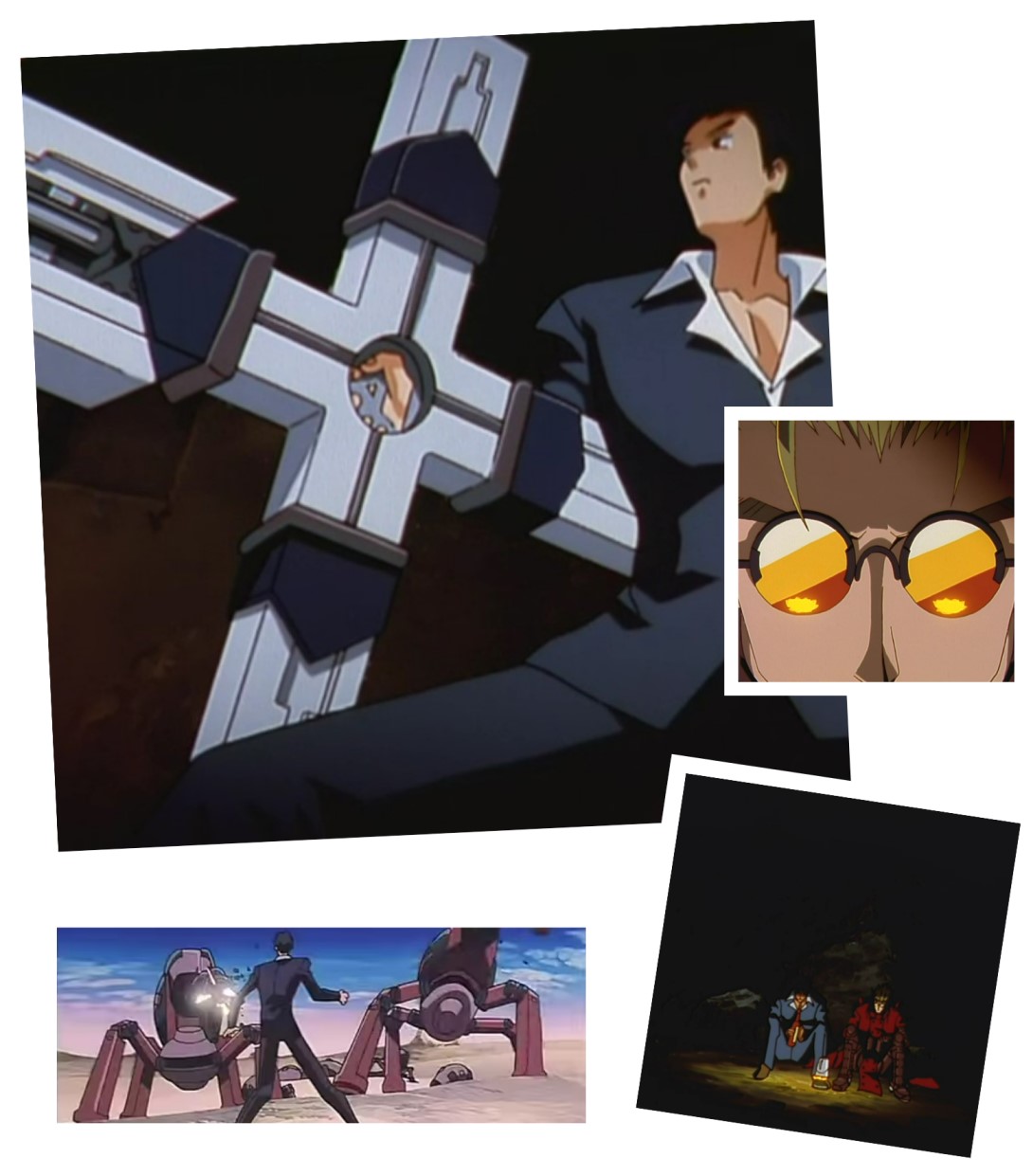
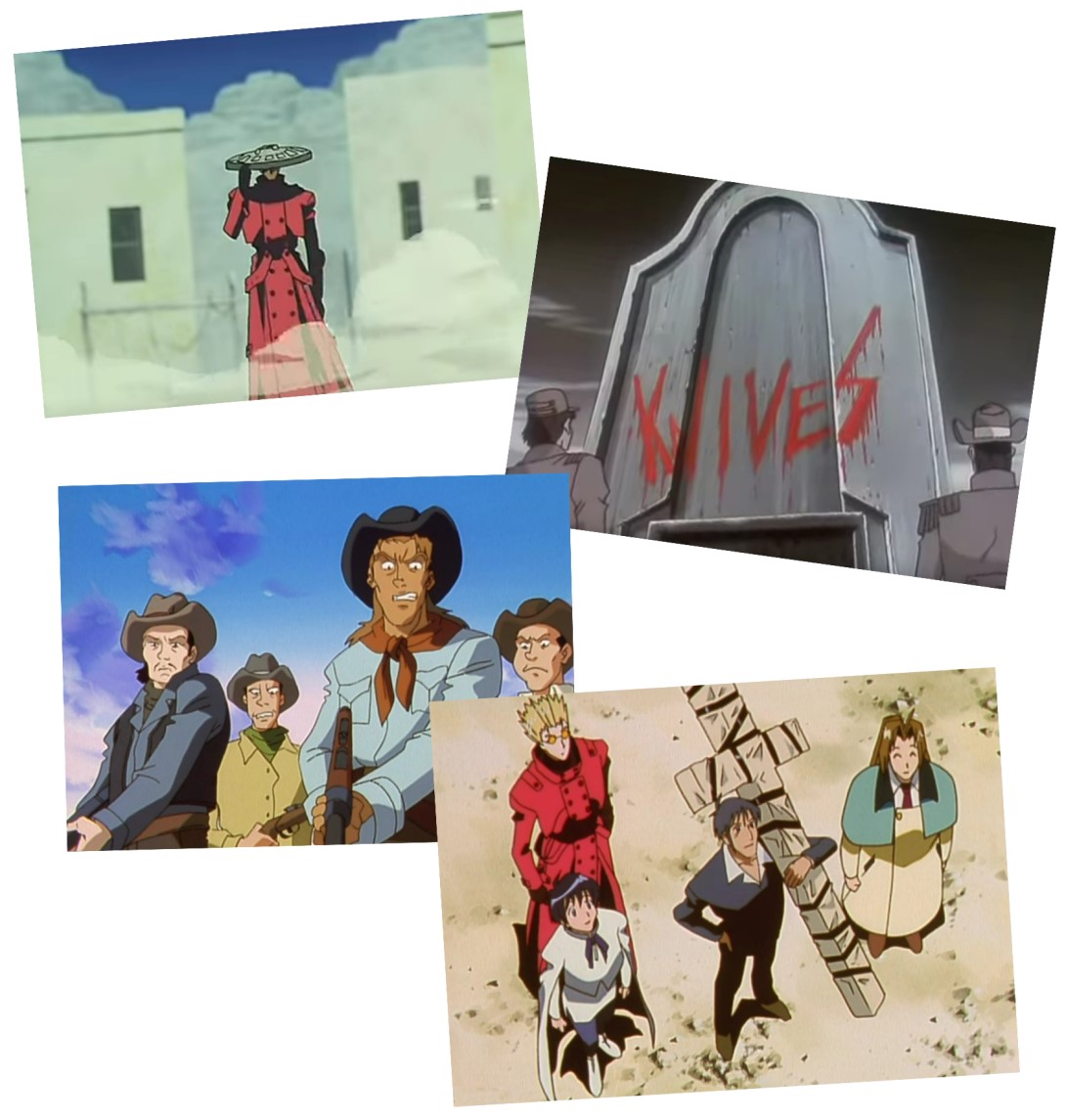
thought I’d dive into one of my favorite Japanese manga adaptations: Trigun.
Of course,
there’s more than 1 series to mention, considering the freshly released Trigun
Stampede that premiered this year. Both series approach the same material
(for the most part) from different perspectives, and I find both of them
excellent in their own ways.
I have a
bit of a soft spot for westerns. Couple that with my love of science fiction
and adventure and Trigun just started checking a lot of boxes in the
positive column as I caught the original series airing on Adult Swim years ago.
If I had
to pick some well known titles to mash together to compare Trigun to,
I’d have to say that it would be somewhat like a combination of the world of Mad
Max (1979) and the sci-fi blend in Cowboy Bebop (1998-1999). (Of
course, Trigun was one of Bebop’s contemporaries airing in the
same year.) I adore the blend of action with drama and comedy. Some of the
physical anime gags go a little over-the-top (especially facial features and
expressions). Those really aren’t my favorite bits, but everything else about
the series is a wonderful blend of chaos, futuristic steampunk, and the visuals
of an alternate world “old West.”
Before I
go any further, I feel I do need to warn that this review will inherently
contain some mild SPOILERS regarding the Trigun storyline continuity.
The 1998 series and the 2023 series approach Vash’s story from different points
in the timeline and some bits of information revealed as a surprise or
plot-twist late in the Trigun original series are front and center in
the very first episodes of the Trigun Stampede series. Further, anyone
who has watched the original series will generally know most of what will
happen in Trigun Stampede, however not everything is shown in this first
season. There’s room for the “missing characters” (to some extent) and other
plot elements to be explored in season 2 and potentially beyond.
First,
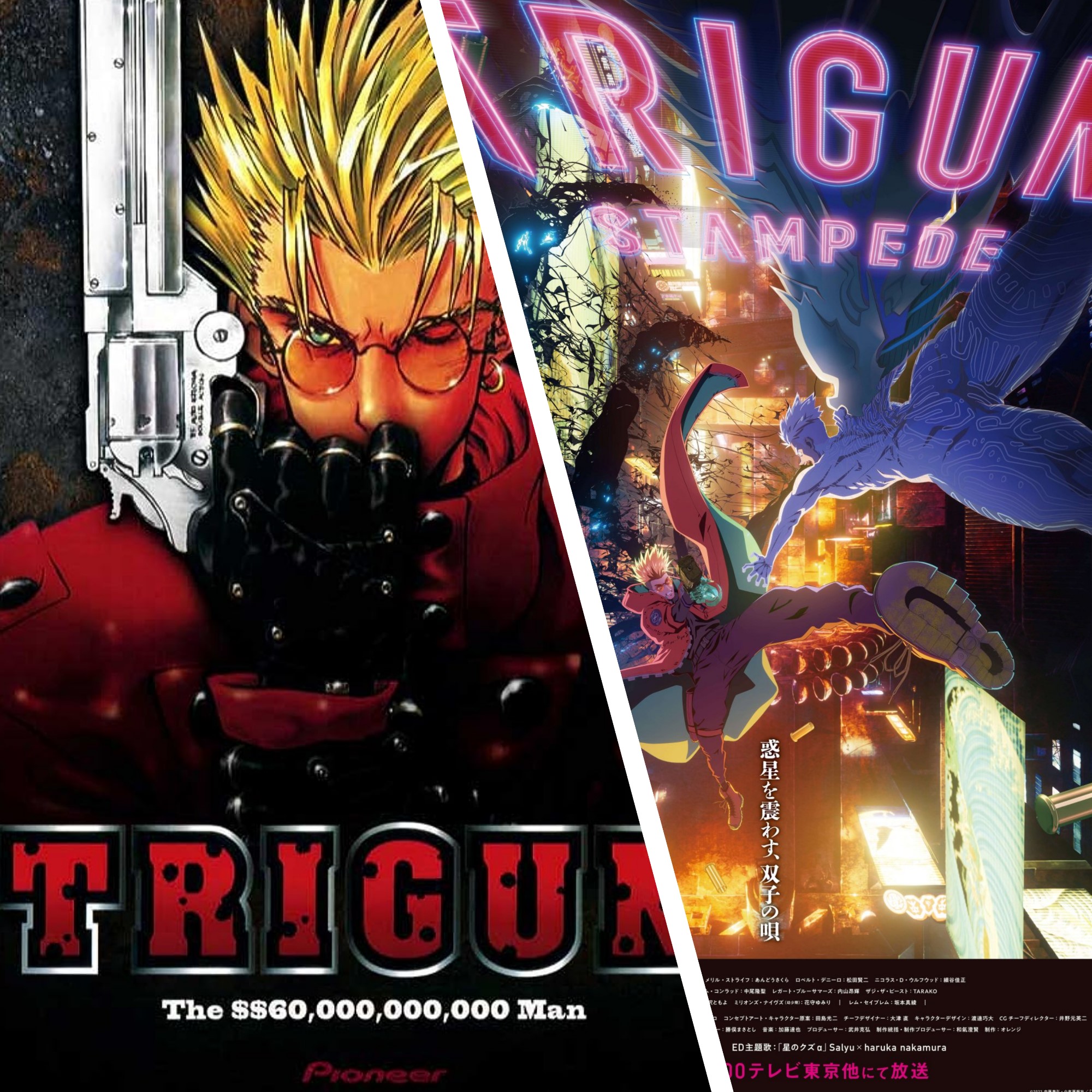
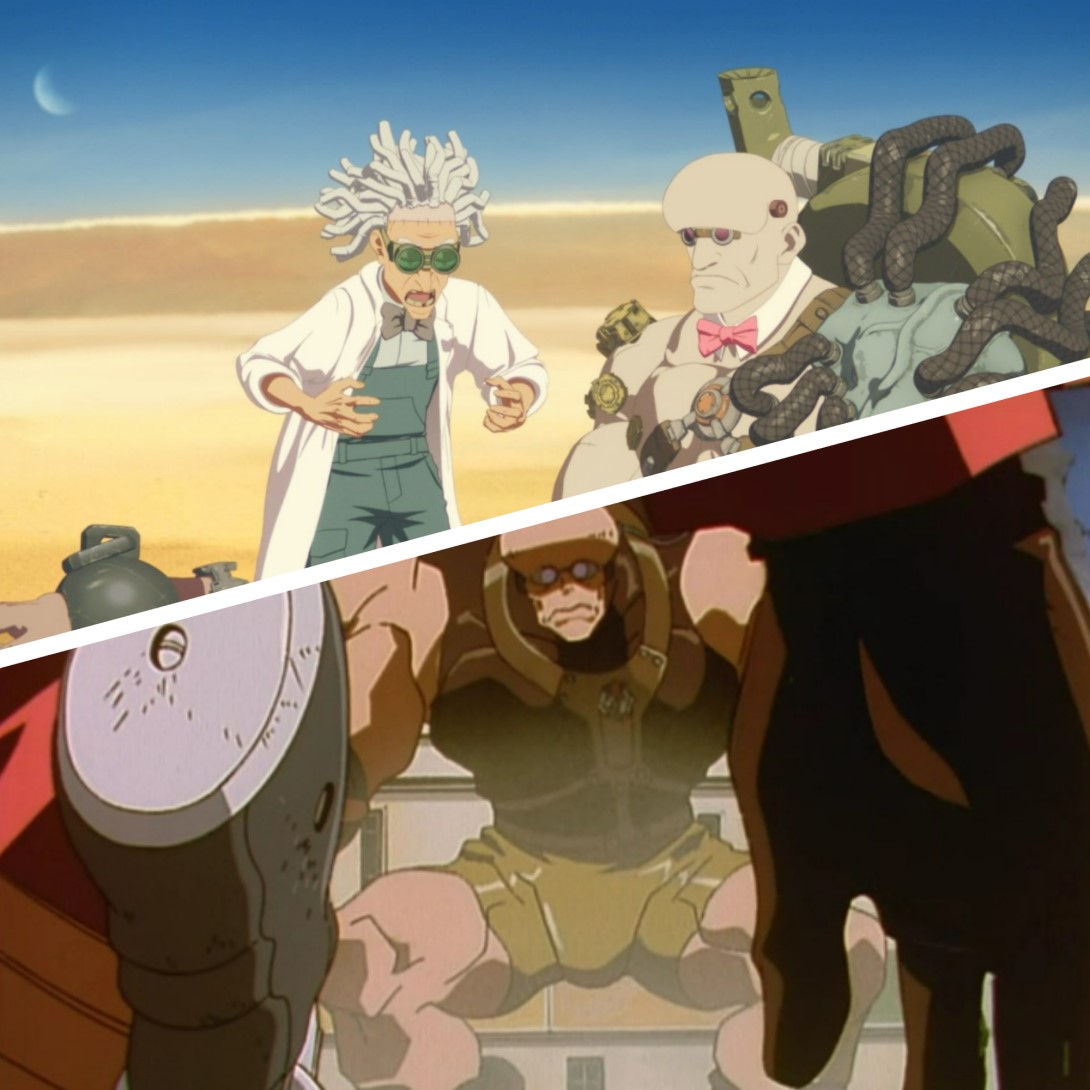
let’s talk animation style. With the 20-plus years between Trigun and TrigunStampede, it’s a given that animation production methods and styles will
have changed over time. 1998’s series fits right in with the high quality of
its contemporaries. The action was handled really well, and not all of the
comedy digressed into “comicalization” or simplistically exaggerated facial
expressions for the characters. Hey, I’m not knocking that stylistic choice –
it’s just not my preferred cup of tea. Even so, plenty of my favorite series
utilize that affectation as a common anime trope. It doesn’t generally impact
my enjoyment.
The Trigun
Stampede series is rather straight-shooting in a seamless animation style
that remains uniform, even while still delivering the moments of emotion and
comedy. The new style is clearly rendered in a digital format, though still
retains much of the “old school” animation charm rather than the shiny plastic
nature of most 3D animation. The action is fluid and well done, and Stampede
also utilizes a more modern approach to cinematography. As an example, there’s
one scene in an early episode of Stampede that comes to mind where Vash
is using parkour as he dodges bullets, and as he flips onto another rooftop or
similar surface the camera does a rotation with him. (This scene is actually
shown in the music video that accompanies the opening theme music for Stampede.)
Now let’s
get into the story a bit. Trigun Stampede might be hard for some fans of
the original series to take in at first because of some changes and/or seeming
omissions. Some characters aren’t seen that are in the 1998 series and even the
world has a different name. Previously called Gunsmoke, it’s now called Nomans
Land. Some of the villain-of-the-week characters don’t make an appearance, and
even some of the Gung-Ho Guns don’t show. Some characters have different backgrounds…
you get the picture.
Most of
the differences are honestly splitting hairs, in my opinion. Stampede is
not worse for wear for these changes. Honestly, it felt like the story was more
cohesive and streamlined. It felt like the original series had more
light-hearted moments sprinkled through the explosions, raining bullets,
questionable pick-up lines, and camaraderie. Trigun Stampede has the
comedy and action down, but also leans in a bit more to drama, ethics,
discrimination, personal moral code, and existential questions. It’s a bit
heavier in tone in some places, considering you know from the outset what the
relationship is between Vash and Knives and get an inkling as to what the
stakes are overall.
There’s
one main thing to keep in mind, however. When the 1998 series ran, the manga
was not finished by a long shot. Both series are made from a combination of Trigun
and Trigun Maximum. The latter just wasn’t complete when the first
series made its run. Maximum also wasn’t a reboot of the original Trigun
manga, but a continuation. The name only changed due to legal red tape because
the publisher changed, etc. Stampede now has the full manga run at its
disposal to draw from, and has the opportunity to spin the entire story in a
different way than presented in 1998.
Both
versions of the series remain true to Vash’s core journey – both literal and
figurative. He strives to put together what went wrong in the past and find
some redemption in his life. Vash has profound sadness within him, and yet shows a great understanding and zest for life and laughter all the same. Throughout both series, in the face of daunting circumstances, he maintains his beliefs in finding alternate
solutions to violence. Though, when violence cannot be avoided, he shows
strength and stands up to defend even those that have tried to hurt him. In
this way, the story of Trigun in both series reminds me of the way of life and perspective
of the late Gandhi and makes this story that much more powerful.
“My creed of nonviolence is an extremely active force. It has no
room for cowardice or even weakness. There is hope for a violent man to be some
day non-violent, but there is none for a coward. I have, therefore, said more
than once....that, if we do not know how to defend ourselves, our women and our
places of worship by the force of suffering, i.e., nonviolence, we must, if we
are men, be at least able to defend all these by fighting.” - M.K. Gandhi
As usual,
I feel I must disclose that, at this time, I haven’t read the manga to know
specifically what differences exist between either Trigun’s original
series or Stampede and the source material. There are many anime
resource sites, forums, and databases you are welcome to peruse should you wish
to look up the play-by-play yourself.
One of the
things that brings me great joy about all of the Trigun series is that, at
least for the English dubbed versions, Johnny Yong Bosch (Black Clover,
Demon Slayer: Kimetsu no Yaiba, Bleach: Thousand Year Blood War) has
remained the voice of Vash the Stampede throughout. He seems to be the
only consistent cast member to return through both series and the 2010
stand-alone movie. He brings something great to all of the characters he brings
to life on the screen, and seemingly effortlessly evokes both their strengths
and vulnerabilities.
Yes, I did
mention that there was a Trigun movie. Trigun: Badlands Rumble
hit screens in 2010 as an independent story that could have taken place
somewhere in the middle of the continuity of the 1998 series. It didn’t pick up
from the end, as some might have hoped. In that way it shared even more in
common with the Bebop series, as Cowboy Bebop: The Movie (2001)
did the same thing (much to my dismay).
Trigun
Stampede does have
a 2nd season announced, though details are scarce as to the timeline
for production. The ending of Stampede’s first season did allude to the
return of a familiar original series character that was conspicuously missing
thus far. There’s always room for more villains and other supporting characters
to pop up in the next installments, as well as new elements of the expanded
story within the source material. I just hope they also find a way to fit
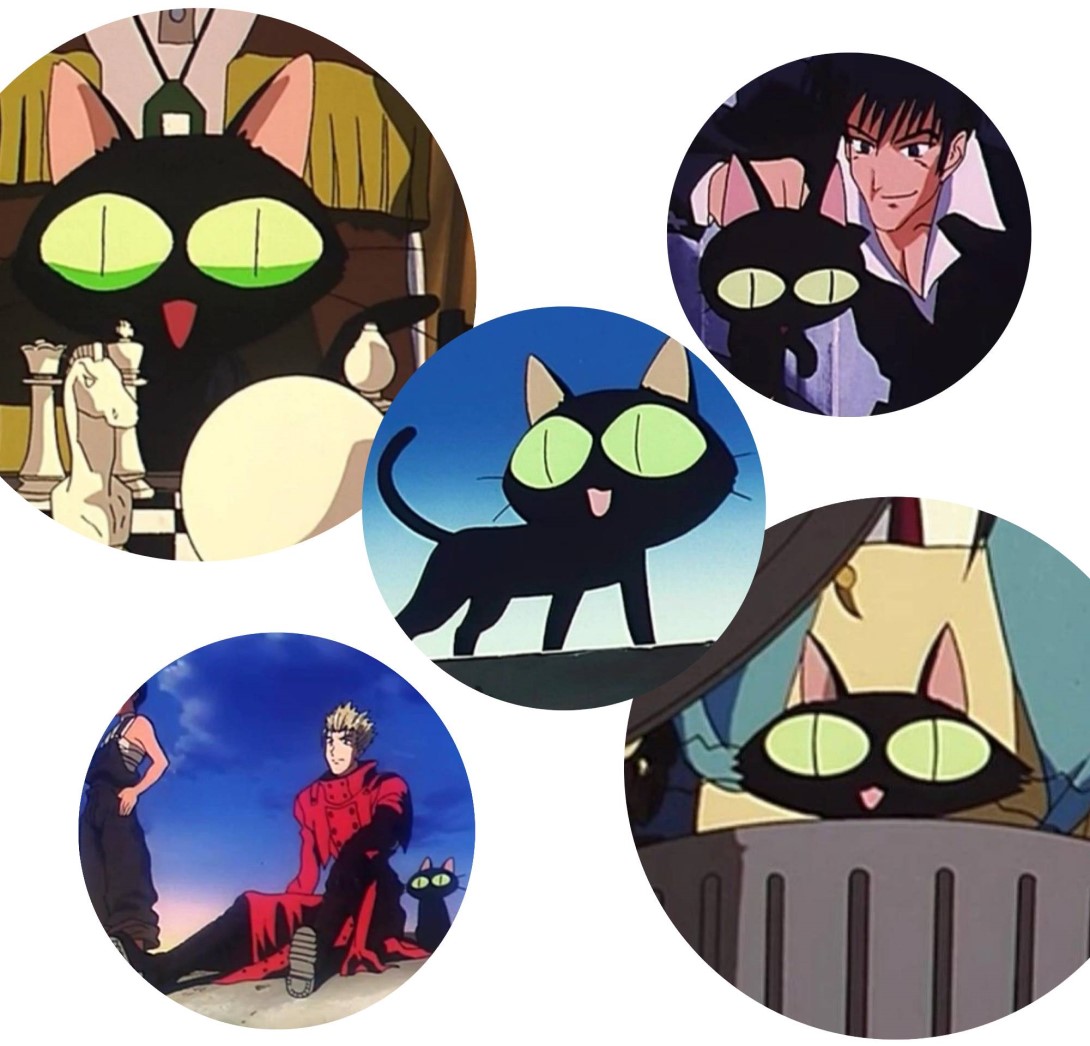
Kuroneko back in for at least a cameo. The familiar silly black cat was a
missed opportunity in Stampede, in my book at least.
If you are
a fan of the original series, I implore you to give Trigun Stampede a
chance. If you haven’t watched any of the series yet – old or new – I do not
envy your decision between original and new series, but once you’ve watched one,
I encourage you to watch the other. Stampede is definitely an easier
binge with only 12 episodes compared to the original’s 26 + movie, but I’d have
to say it’s well worth the time spent to view both perspectives.